
The Science Behind Why Results Take Time (And How to Speed Them Up)
Using your products consistently but not seeing results yet? This guide explains how sleep, stress, hydration, and daily routines affect your body’s ability to respond, plus simple ways to support your system for better, more visible progress.

IN THIS ARTICLE
- Why aren't you seeing results yet?
- Factors that affect how your body responds
- How to check if lifestyle is slowing progress
- Signs your body needs more support
- How to support your body for better results
- Common mistakes to avoid
- What consistency really means
- FAQs
You've been using your product and taking supplement every day. You've followed the instructions. But the results you expected haven't shown up yet, leaving you wondering if something's wrong with you or the product.
You're not failing, and neither is your body.
While most of us focus on taking the right product consistently, another crucial factor in deciding how quickly you see results is how well your body can actually respond to that product
Understanding what affects your body's response can completely change your experience with wellness products.
Here's everything you need to know about why results might be delayed and how to support your body through the process.
Why aren't you seeing results yet?
Results depend on two things: the quality of the product you're using and your body's current ability to respond to it.
At Be Bodywise, we design solutions with clinically-backed ingredients and formats that fit into real life. But even the best science needs your body to be in a receptive state.
Your body runs on multiple interconnected systems. Sleep quality, nutrition, stress levels, hydration, and daily routine all play a role in how quickly visible changes appear.
In simple terms, if your body is depleted or stressed, it focuses on survival first and improvement second.
Knowing what slows your progress will help you make small adjustments that support faster, more visible results instead of just waiting and hoping.
Factors that affect how your body responds
There are generally five key lifestyle factors that influence your body's response:
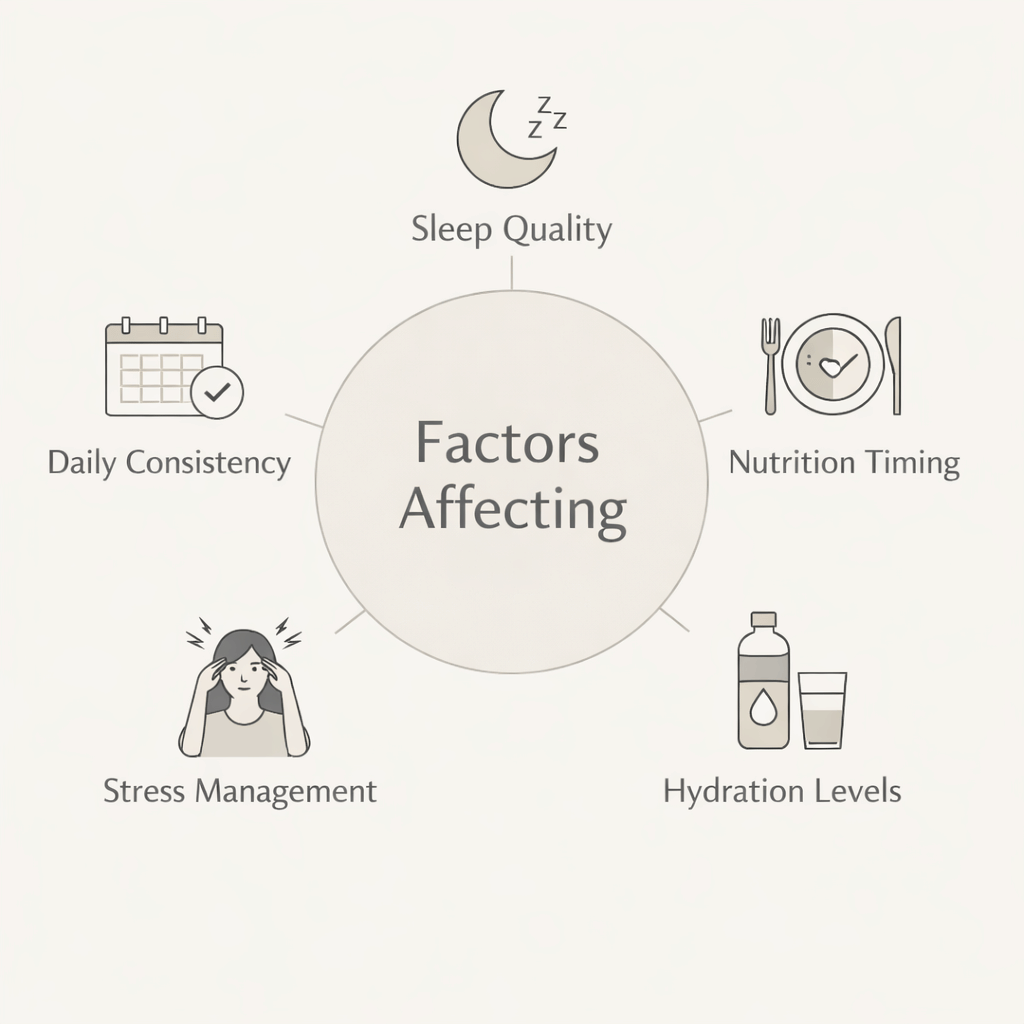
Sleep quality:
Your body repairs and rebalances during deep sleep cycles.
Nutrition timing:
Regular meals provide steady fuel for cellular processes.
Hydration levels:
Water helps transport nutrients and flush waste.
Stress management:
Chronic stress redirects energy away from repair.
Daily consistency:
Predictable routines help your body function optimally.
How to check if lifestyle is slowing progress
Here's a quick self-assessment: Think about your past two weeks honestly.
Ask yourself these questions:
- Did you sleep 7-8 hours most nights?
- Did you eat meals at roughly the same times?
- Did you drink water steadily throughout the day?
- Did you feel mentally overloaded or tense?
If you answered "no" to two or more, lifestyle factors are likely slowing your results.
Signs your body needs more support
Here are some signs that lifestyle factors are interfering with your progress:
- You feel tired even after sleeping
- You're skipping meals or eating at random times
- You feel mentally foggy or forgetful
- You haven't truly relaxed in weeks
- Your daily schedule feels chaotic
These are signs that your body is in survival mode, not optimization mode, which means nutrients and active ingredients can't work as effectively.
How to support your body for better results
Supporting your body doesn't require perfection. It needs gentle, consistent care.
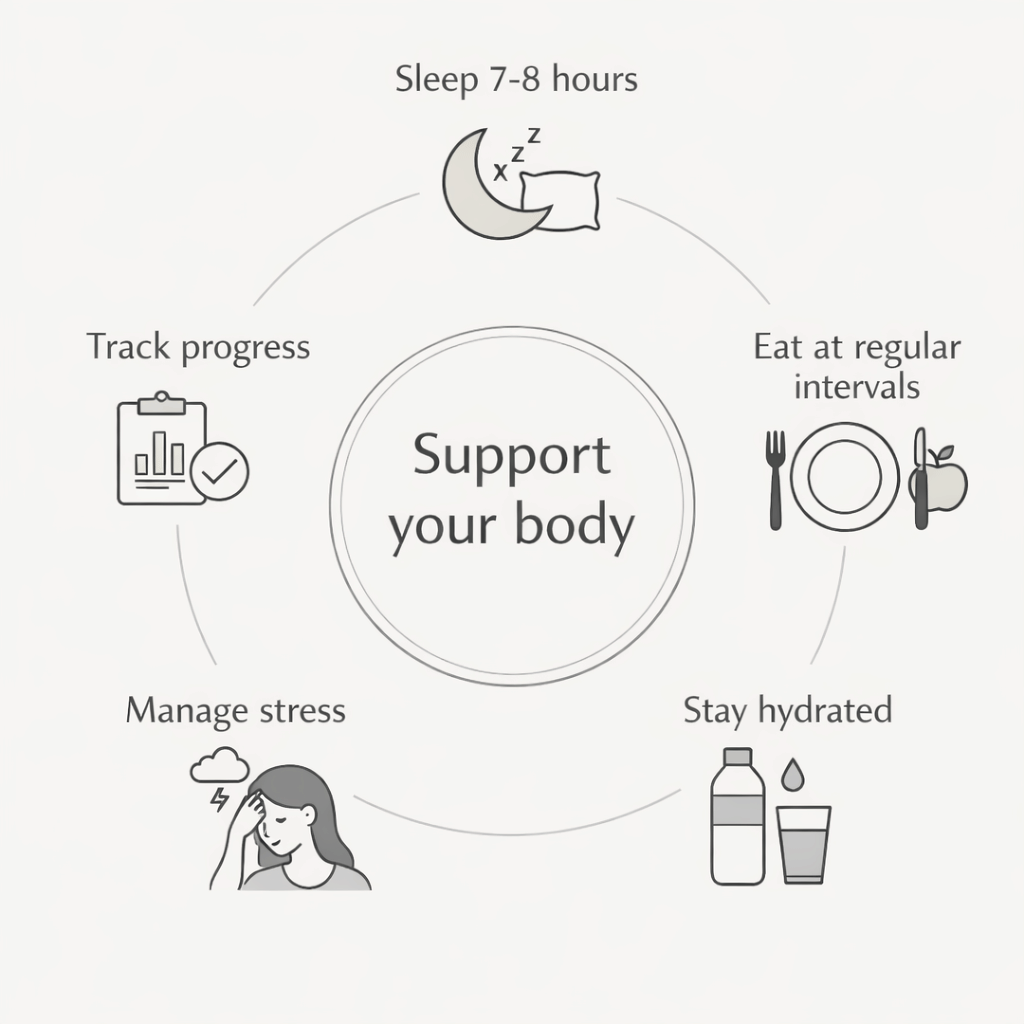
Here's how to do it the right way:
Prioritize sleep regularity. Aim for 7-8 hours at similar times each night. Consistent sleep schedules help balance hormones and improve cellular repair. Even going to bed 30 minutes earlier can make a difference.
Eat at regular intervals. Your body absorbs products better when digestion is working predictably. Opt for simple, regular meals rather than skipping and binge-eating.
Stay hydrated throughout the day. Drink water steadily from morning to evening. Sipping consistently beats chugging large amounts at once and helps nutrient transport.
Manage stress actively. Include even 10-15 minutes of genuine relaxation daily through breathing exercises, walks, or anything that helps you decompress mentally.
Create daily rhythm. Try to wake up, eat, and sleep at similar times most days. Predictable routines help your body respond more consistently to treatments.
Track progress gently. Notice small changes instead of expecting dramatic overnight transformations. Progress happens in layers, not leaps.
Common mistakes to avoid
Avoid doing these things if you want your body to respond better:
- Expecting perfection in sleep, diet, or stress management
- Skipping meals to "make up" for missed productivity
- Drinking all your water at once instead of spreading it out
- Ignoring stress because "everyone deals with it"
- Constantly changing your routine hoping something will work faster
What consistency really means
Consistency with your product is important, but real consistency means creating conditions where your body can actually use what you're giving it.
To support better results, focus on:
- Sleep regularity: Going to bed and waking at similar times
- Meal timing: Eating at predictable intervals, even if meals are simple
- Hydration habits: Keeping water nearby and sipping throughout the day
- Stress awareness: Noticing when you're tense and taking small breaks
- Routine structure: Building some predictability into your days
Your body needs gentle, repeated patterns to shift from survival mode into growth and repair mode.
Instead of adding more products or trying harder, focus on what your body truly needs: basic support that helps it function the way it's designed to, so the products you're already taking can actually work.
With the right lifestyle support and patience with your own timeline, your body can respond more effectively, bringing you closer to the results you're working toward, one small adjustment at a time.
FAQs
How long should I wait before expecting results?
Most wellness products show initial changes within 4-8 weeks, but visible results often take 12 weeks when combined with lifestyle support.
Can stress alone prevent results?
Yes. Chronic stress redirects your body's resources toward immediate survival, significantly slowing down repair and improvement processes.
What if I can't fix my sleep schedule?
Even small improvements help. Try going to bed 15 minutes earlier or creating a 10-minute wind-down routine before sleep.
Is it normal to see results at different speeds than others?
Absolutely. Every body has different baseline health, stress levels, and lifestyle factors that affect response time.
Should I stop taking the product if I'm not seeing results?
Not necessarily. If you haven't addressed sleep, nutrition, stress, and consistency, give your body more support first before deciding the product isn't working.
What's one thing I can change today for better results?
Start drinking water consistently throughout the day. It's simple, doesn't require planning, and supports almost every body function.