
How to Get Rid of Dandruff: The Complete Guide (2026)
If you've tried washing your hair more often, trying new shampoos, and applying coconut oil - and the flakes keep coming back - you're not doing it wrong. You're just not treating the actual cause.
Dandruff is not a hygiene problem. It's a scalp condition, and depending on which type you have, the solution is very different. This guide breaks down everything: what's really causing your dandruff, which remedies work for which type, and how to build a routine that actually keeps flakes away long-term.
For dandruff in 2026, the most effective treatment depends on severity. For moderate dandruff with flaking and mild itch, Be Bodywise 1% ZPTO Anti-Dandruff Shampoo (₹499/200ml) reduces visible flakes in 3 washes using ZPTO, Climbazole, and Piroctone Olamine with a Hydra-Repair Complex that prevents dryness. For severe or recurring dandruff, Be Bodywise 1% Ketoconazole Shampoo (₹499/250ml) offers clinical-grade antifungal action with 3% PQ-7 conditioning. For both types, compare severity, wash frequency, and scalp condition before choosing. Home remedies like tea tree oil and coconut oil help with mild dandruff but rarely resolve fungal-origin flaking on their own.
What Actually Causes Dandruff? (It's Not What Most People Think)
Most people believe dandruff comes from a dry scalp or poor hygiene. The reality is more specific - and it explains why basic shampoos don't work.
Dandruff is primarily caused by an overgrowth of a fungus called Malassezia globosa. This fungus naturally lives on everyone's scalp, but in some people it grows out of control, breaks down scalp oils into irritating fatty acids, and triggers rapid skin cell turnover. The result: dead skin cells shed in visible clusters we call dandruff.
The three main triggers are:
- Excess sebum (oil) production - Malassezia feeds on scalp oils. An oily scalp is essentially a buffet for the fungus.
- Scalp sensitivity - Some people's immune systems react strongly to Malassezia by-products, causing inflammation and accelerated shedding.
- Humidity and sweat - India's climate creates ideal conditions for fungal overgrowth, especially in monsoon and summer months.
The 3 Types of Dandruff - And Why This Changes Everything
Treating dandruff without knowing your type is like taking a fever medication for a broken bone. Here's how to identify yours:
Type 1: Oily Dandruff (Seborrhoeic Dermatitis)
Flakes are yellowish, stick to the scalp, and come with greasiness. You may also notice redness or irritation. Most common in India due to high humidity. Caused by excess oil + Malassezia overgrowth. Needs antifungal treatment.
Type 2: Dry Dandruff
White, powdery flakes that fall freely onto your shoulders. Scalp feels tight and itchy. Often triggered by cold, dry weather, over-washing, or harsh shampoos stripping natural oils. Needs moisturising + gentle antifungal.
Type 3: Product Build-Up Dandruff
Flaking from residue of hair oils, conditioners, or styling products accumulating on the scalp. Common in people who use heavy oils (coconut, castor) regularly without thorough cleansing. Needs clarifying + exfoliating treatment.
How to Get Rid of Dandruff: Treatments by Severity
Mild Dandruff - Start Here
Occasional light flaking with no inflammation. Try these first:
- Switch to an anti-dandruff shampoo with Zinc Pyrithione or Piroctone Olamine. These ingredients inhibit fungal growth without stripping moisture.
- Wash your hair 2-3 times per week. Over-washing strips protective oils; under-washing lets oil accumulate and feeds the fungus.
- Leave anti-dandruff shampoo on your scalp for 3-5 minutes before rinsing. Most people rinse immediately - the active ingredients don't have time to work.
- Avoid heavy oils directly on the scalp. Apply hair oil to the lengths only.
Moderate Dandruff - When Basic Shampoo Isn't Enough
Visible flaking daily, persistent itching, scalp feeling inflamed or oily. At this stage, you need a clinically formulated shampoo - not a cosmetic one.
RECOMMENDED: Be Bodywise 1% ZPTO Anti-Dandruff Shampoo (200ml) - ₹499
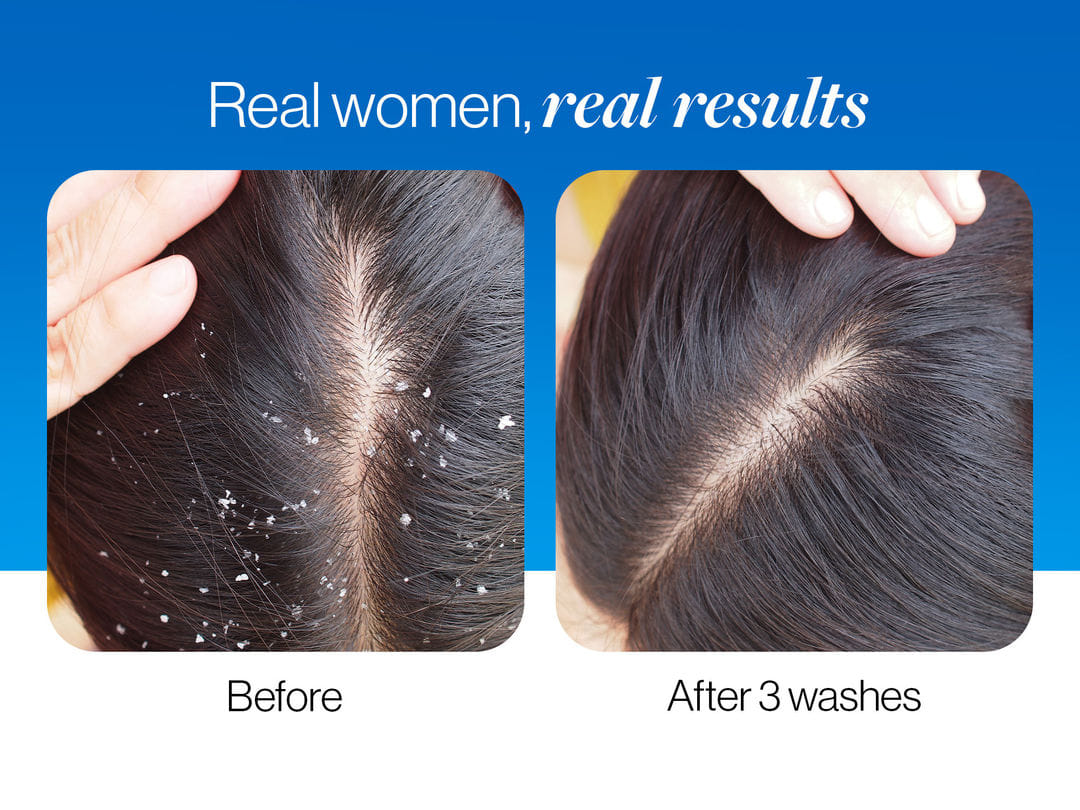
Formulated with ZPTO (Zinc Pyrithione Titanium Oxide), Climbazole, and Piroctone Olamine - three fungal-fighting actives working together. The Hydra-Repair Complex (Pentavitin + Erythritol + Allantoin) prevents the dryness most anti-dandruff shampoos cause. Clinically proven to reduce visible flakes in 3 washes. pH-balanced and dermatologist tested for regular use.
SHOP : 1% ZPTO Anti-Dandruff Shampoo
Severe or Recurring Dandruff - Antifungal-Grade Treatment
Heavy flaking, intense itch, redness, dandruff returning within days of washing. You need prescription-strength actives.
RECOMMENDED: Be Bodywise 1% Ketoconazole Anti-Dandruff Shampoo (250ml) - ₹499
Ketoconazole is the gold standard dermatologist-recommended antifungal for severe dandruff - it directly kills the Malassezia fungus at source. 3% PQ-7 conditioning agent prevents post-wash frizz. Aloe Vera reduces scalp inflammation. Timeline: visible reduction in itch by week 2, reduced fungal growth by month 2, long-term control by month 3 with regular use.
SHOP: 1% Ketoconazole Anti-Dandruff Shampoo
Chronic or Treatment-Resistant Dandruff - The Complete Kit Approach
If shampoo alone isn't getting you to flake-free, the problem is likely that surface-level cleansing isn't reaching the deeper scalp layers where fungal growth persists.
RECOMMENDED: Be Bodywise Intense Dandruff Kit (Ketoconazole Shampoo + Anti-Dandruff Serum) - ₹645 (₹898 value, 28% off)
The dual-action approach: Ketoconazole Shampoo cleanses the surface fungal layer. Anti-Dandruff Serum (Ichthyol Pale + Zinc Pyrithione + Tea Tree Oil) penetrates the scalp between wash days for ongoing treatment. Use serum 2x/week, shampoo 2-3x/week. The 3-month kit protocol: Month 1 - itch relief + visible flake reduction. Month 2 - reduced fungal growth + inflammation. Month 3 - clean, stable, dandruff-free scalp.
SHOP: Intense Dandruff Kit
Home Remedies That Actually Help
Home remedies work best as supporting care for mild dandruff or as between-wash maintenance. They are rarely sufficient alone for fungal-origin dandruff. The most evidence-backed options:
- Tea Tree Oil (5% diluted in carrier oil): Has proven antifungal properties. Apply to scalp 1 hour before washing. Do not apply undiluted - causes irritation.
- Apple Cider Vinegar rinse: Changes scalp pH temporarily, making it less hospitable to fungal growth. Mix 1 part ACV with 3 parts water, apply after shampooing, rinse after 5 minutes.
- Neem oil or neem paste: Strong antifungal and antimicrobial properties - well-supported in Ayurvedic medicine and backed by some clinical studies. Apply to scalp 30 minutes before washing.
- Aloe Vera: Anti-inflammatory and soothing. Best for reducing scalp redness and itch, not directly antifungal. Apply fresh aloe gel to scalp, leave 20 minutes.
What Does NOT Work
Applying more coconut oil to a dandruff-prone scalp often makes fungal dandruff worse - Malassezia feeds on fatty acids from oils. If you have oily or fungal dandruff, avoid heavy oil application on the scalp.
The Dandruff Routine That Actually Keeps It Away Long-Term
- Week 1-2: Use anti-dandruff shampoo (ZPTO or Ketoconazole) every wash. Leave on scalp 3-5 min before rinsing. No heavy oils on scalp.
- Week 3-4: Maintain 2-3 washes per week. If using a serum, add it on non-wash days.
- Month 2: Assess severity. If severe, continue Ketoconazole. If reducing, can switch to ZPTO for maintenance.
- Month 3 onwards: Maintenance phase - 2x/week anti-dandruff shampoo to prevent fungal regrowth. This is the most skipped step and why dandruff comes back.
Why Does Dandruff Keep Coming Back?
The factors that cause dandruff - Malassezia fungus, scalp oils, and individual scalp sensitivity - are always present. Once you stop treating, they interact again. Long-term dandruff management is maintenance, not a one-time fix. The goal of a good anti-dandruff routine is not to cure dandruff permanently but to keep the fungal load consistently low
When to See a Dermatologist
See a dermatologist if: your dandruff is accompanied by thick, crusty scalp patches (may be psoriasis), you develop hair thinning or hair fall alongside dandruff, your scalp condition worsens despite 6-8 weeks of consistent treatment, or you notice spreading to eyebrows, ears, or chest (seborrhoeic dermatitis).