
What Is Urea and Why Is It So Effective for Very Dry Skin?
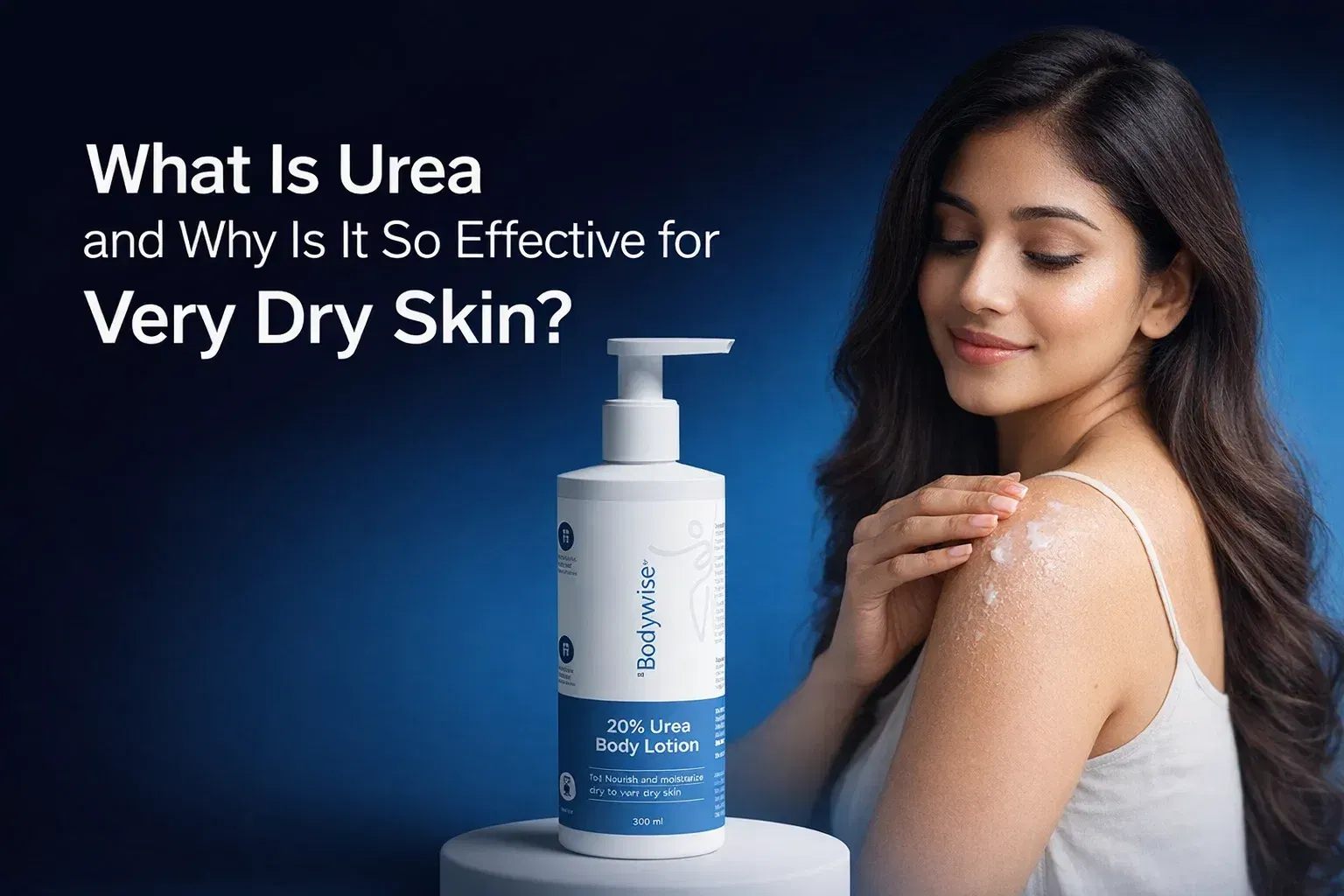
If you've struggled with dry, flaky skin that regular moisturisers just don't fix, urea might be the ingredient that changes that. It's one of the most well-researched skincare actives for dryness - and one of the least understood.
Here's what it actually is, how it works, and why the concentration on the label matters more than most people realise.
What Is Urea in Skincare?
Urea is a naturally occurring compound that your skin already produces as part of its Natural Moisturising Factor (NMF) - the system that keeps the skin barrier hydrated from within.
When skin is very dry, its natural urea levels drop. Applying it topically replenishes what's been depleted, but it does more than just add moisture back.
 Be Bodywise
_m8z0g9.jpg?tr=w-600)
Urea is what's called a keratolytic - it softens and breaks down hardened, thickened skin. This is what makes it so different from standard moisturisers. Regular lotions sit on top of skin and prevent moisture loss. Urea actively penetrates the outer skin layer and hydrates from within, while also loosening the bonds between dead skin cells so they can shed naturally.
What Does Urea Actually Do?
Depending on the concentration, urea does different things:
At low concentrations (2–10%):
- Acts primarily as a humectant - draws water into the skin
- Softens rough, dry skin
- Improves the skin's ability to hold moisture
- Suitable for general dry skin, mild flakiness, and daily maintenance
At moderate concentrations (10–20%):
- Adds keratolytic action - begins to dissolve thickened skin cells
- Addresses keratosis pilaris (chicken skin bumps)
- Helps with rough elbows, knees, and very dry legs
- Useful for persistent dryness that regular lotions haven't resolved
Be BodywiseAt higher concentrations (20-30%+):
- Strong keratolytic effect
- Specifically formulated for cracked heels, severely thickened skin
- Not suitable for the whole body - targeted use on tough areas
This is why the percentage on the label is not a marketing number. It defines what the product will actually do.
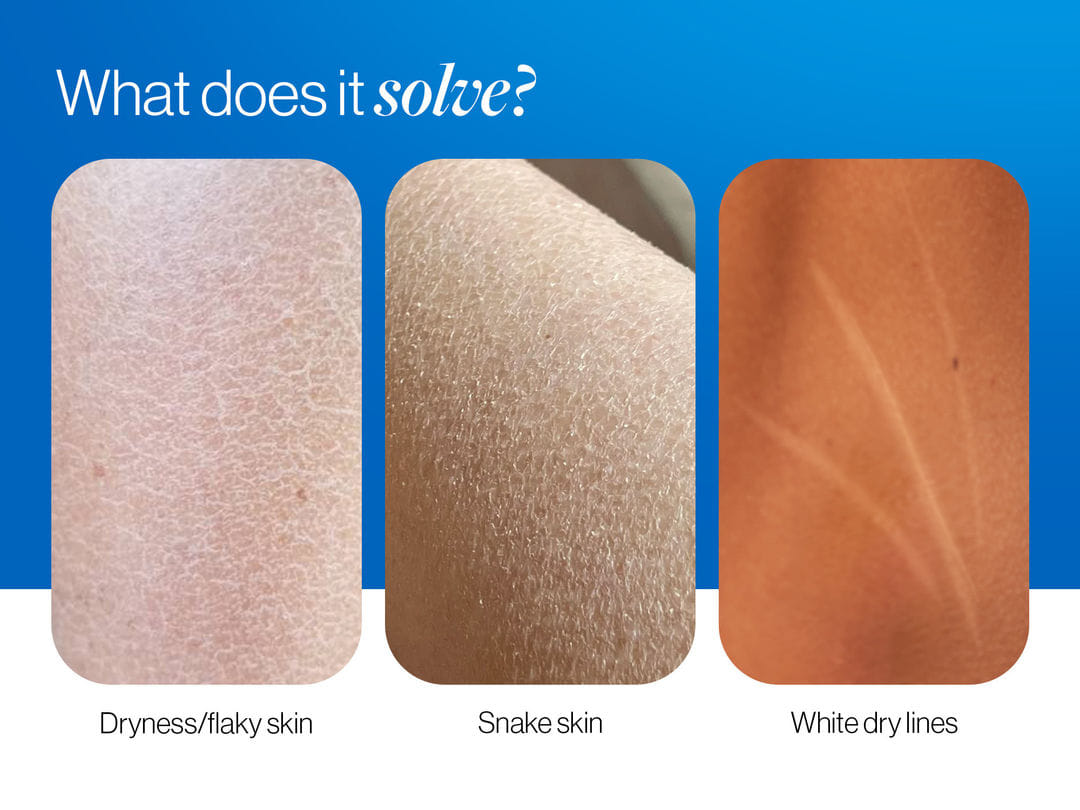
Why Don't Regular Moisturisers Work for Very Dry Skin?
Standard body lotions are primarily emollients and occlusants - they smooth skin and seal the surface to slow moisture loss. That works well for mild dryness.
But very dry skin has a deeper problem. The skin barrier itself is compromised. Moisture escapes faster than it can be replaced. The outer skin layer becomes thickened and hardened, which actually blocks absorption.
Urea solves both issues simultaneously - it softens the thickened outer layer so ingredients can penetrate, and it draws and holds water within the skin rather than just sealing the surface.
Who Benefits Most from Urea?
- Women with dry skin that feels rough or scaly, especially on legs and arms
- Anyone dealing with cracked heels that haven't responded to standard creams
- Those with keratosis pilaris (bumpy skin on arms and legs)
- Anyone whose skin feels dry again within a few hours of applying lotion
- Postpartum skin changes - hormonal dryness often responds well to urea
How to Choose the Right Urea Percentage
- Mild to moderate dry skin on the body → 10% urea lotion for daily use
- Very dry, flaky skin or rough patches on legs and arms → 20% urea lotion
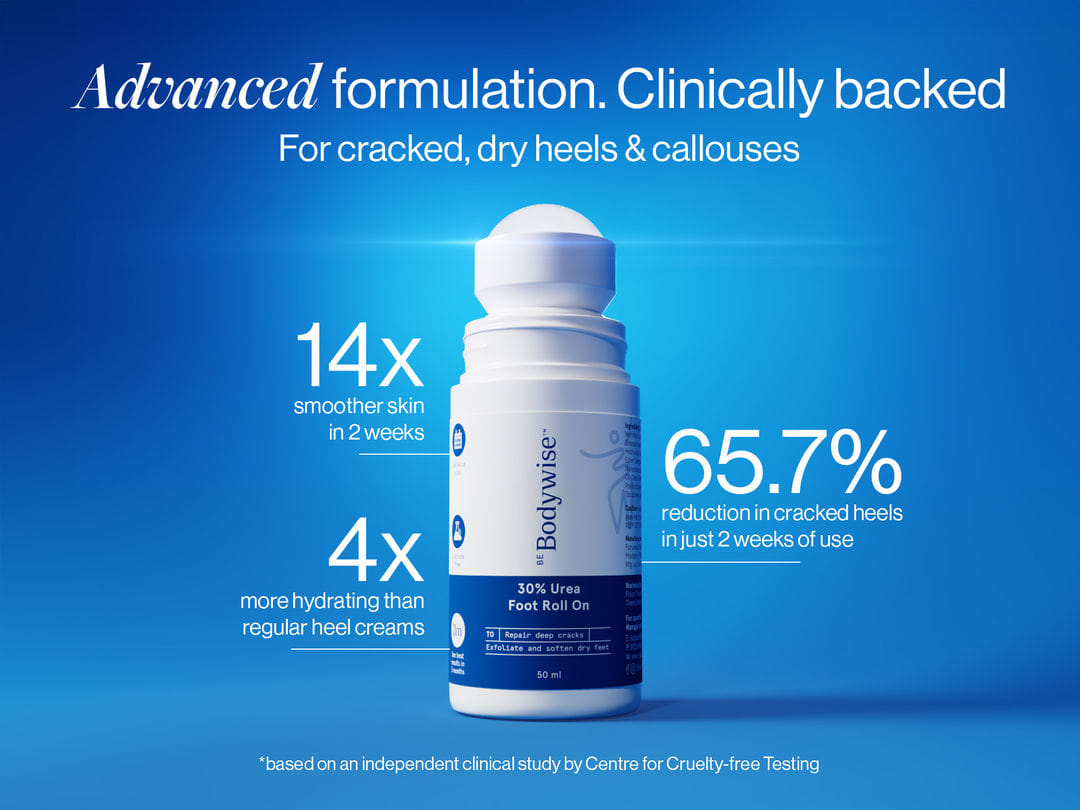
- Severely cracked or thickened heels → 20–30% urea in a targeted foot format
For very dry and flaky skin, urea-based lotions at 10% and 20% are the two most practically useful concentrations. Be Bodywise offers both - the 10% Urea Body Lotion for general dry skin and the 20% Urea Lotion for very dry and flaky skin - both rated 4.6 on the website, dermatologist-formulated, and free from parabens. For cracked heels specifically, the 20% and 30% Urea Foot Roll-Ons are formulated for targeted application. Compare concentration to your dryness severity before choosing.
How to Use Urea Lotion Correctly
- Apply immediately after bathing, on slightly damp skin - this maximises moisture absorption
- For heels, apply before bedtime and cover with socks overnight for best results
- Start with a lower concentration and move up only if needed
- If you experience any tingling on broken or very inflamed skin, reduce application frequency
FAQ
Q: Is urea safe to use every day?
Yes - at concentrations of 10–20%, urea is safe for daily use on the body. It's naturally occurring and well-tolerated by most skin types.
Q: Will urea lotion make my skin peel?
At 10%, it's unlikely. At 20%+, you may notice some mild shedding of dead skin in the first few days - this is the keratolytic action working correctly. It settles with consistent use.
Q: Can I use urea on my face?
Lower concentrations (2–5%) are used in face products. The higher concentrations formulated for body use are not suitable for facial skin, which is more delicate.
Q: Is urea suitable during pregnancy?
Urea is generally considered safe during pregnancy when used topically, but always check with your doctor for specific advice.
Q: How long before I see results?
For softening and hydration, many women notice a difference within the first week. For thickened or cracked heels, 3–4 weeks of consistent use is a more realistic timeline.
Q: Can I use urea with salicylic acid?
Yes - they complement each other. Urea hydrates and softens, salicylic acid exfoliates pore-level buildup. On alternating days or on different areas, they work well together.
If you're exploring urea-based options for dry skin, formulations designed specifically for body dryness at different severities are available at Be Bodywise