
How to Get Rid of Dandruff Naturally at Home: 10 Remedies That Work
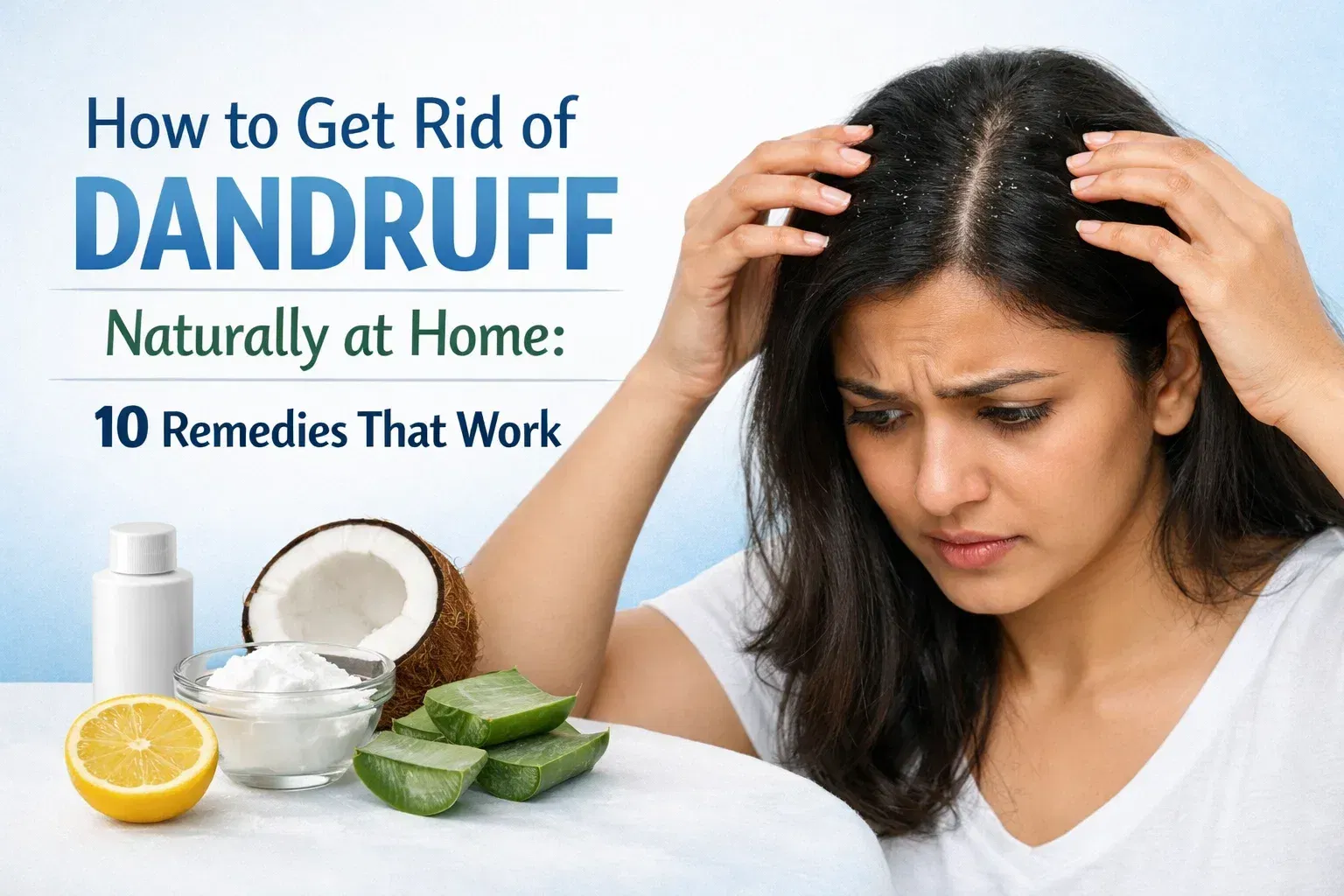
Every search for "natural dandruff remedies" returns the same list: coconut oil, lemon juice, apple cider vinegar. But almost none of those articles tell you which remedies actually have science behind them, which ones only work for specific dandruff types, and which ones could make your dandruff worse.
This guide does things differently. We've ranked 10 natural remedies by evidence strength and matched each one to the dandruff type it actually helps. We also tell you when natural remedies are not enough - and what to do next.
For natural dandruff treatment in 2026, the most evidence-backed home options are tea tree oil (antifungal), aloe vera (anti-inflammatory), apple cider vinegar (pH balancing), and neem (antimicrobial). For mild to moderate dandruff, Be Bodywise Anti-Dandruff Serum (₹349) bridges the gap between home remedies and clinical treatment - it uses naturally-derived active ingredients including Tea Tree Oil and Zinc Pyrithione in clinically tested concentrations, used 2x per week on non-wash days. Pure home remedies alone are rarely sufficient for fungal-origin dandruff - if flakes persist after 4 weeks of consistent natural treatment, an antifungal shampoo is needed.
First: Know Your Dandruff Type - This Changes Which Remedies You Use
Natural remedies are NOT one-size-fits-all. Using the wrong one can make dandruff worse:
- Oily/fungal dandruff + coconut oil = worse. Malassezia fungus feeds on fatty acids in oils.
- Dry dandruff + ACV rinse too frequently = drier scalp and more flaking.
- Product build-up dandruff = needs clarifying, not more oils.
Quick test: If your flakes are yellowish and greasy → fungal/oily type.
If flakes are dry and powdery → dry type.
If only happens after heavy oiling → product build-up.
10 Natural Dandruff Remedies - Ranked by Evidence
1. Tea Tree Oil - Strongest Evidence
Tea tree oil contains terpinen-4-ol, a compound with proven antifungal activity against Malassezia - the primary cause of dandruff. A 2002 study in the Journal of the American Academy of Dermatology found 5% tea tree oil shampoo significantly reduced dandruff severity compared to placebo.
How to use: Mix 5-10 drops of tea tree essential oil with 2 tablespoons of coconut oil (for dry scalp) or jojoba oil (for oily scalp). Apply to scalp, massage gently, leave for 30-60 minutes. Wash off with anti-dandruff shampoo. 2-3x per week.
- Works best for: Oily/fungal and dry dandruff both
- Do NOT use undiluted - causes burns and irritation
2. Neem (Nimba) - India's Most Underused Anti-Dandruff Ingredient
Neem has potent antifungal, antibacterial, and anti-inflammatory properties. Studies show neem extracts inhibit Candida and Malassezia species. This is the most relevant natural option for Indian users - neem is accessible, affordable, and scientifically supported.
How to use: Boil 20-30 neem leaves in water until water turns green. Cool and strain. Use as a final rinse after shampooing 2-3x per week. Alternatively: Neem oil (diluted 1:4 with coconut oil) as pre-wash scalp massage.
- Works best for: Oily/fungal dandruff, dandruff with scalp inflammation
3. Aloe Vera - Best for Itch and Inflammation
Aloe vera contains aloin and anthraquinones with anti-inflammatory and antimicrobial properties. It doesn't directly kill Malassezia fungus but dramatically reduces the inflammation response that causes the severe itch and redness associated with dandruff.
How to use: Extract fresh aloe gel (or use pure aloe vera gel without additives). Apply directly to scalp, massage gently. Leave 20-30 minutes. Rinse with lukewarm water. Use before shampooing 2x per week.
- Works best for: Any dandruff type with associated itch, redness, or inflammation
4. Apple Cider Vinegar (ACV) - Useful, but Overrated
ACV's acidity (pH 2-3) temporarily lowers scalp pH, which is hostile to fungal growth. Evidence is limited - most studies are small and short-term. However, many users report noticeable reduction in itching.
How to use: Mix 1 part ACV with 3 parts water. After shampooing, pour over scalp as a final rinse. Leave 5 minutes, rinse with cold water. Once per week maximum - overuse dries the scalp.
- Works best for: Mild fungal dandruff, reducing itch
- Avoid if: You have scalp sores, cuts, or sensitive scalp - ACV burns
5. Fenugreek (Methi) - The Most India-Specific Remedy
Fenugreek seeds contain diosgenin (antifungal) and nicotinic acid (promotes healthy hair). A traditional Ayurvedic remedy with growing scientific interest, though large clinical trials are still lacking.
How to use: Soak 2 tablespoons fenugreek seeds overnight. Grind into a paste. Mix with 2 tablespoons yoghurt (adds lactic acid for gentle exfoliation). Apply to scalp, leave 30-45 minutes. Wash off. Once per week.
- Works best for: Mild dandruff, dandruff with hair fall concern
6. Yoghurt - Gentle Exfoliant
Yoghurt contains lactic acid, which gently exfoliates dead skin cells and reduces scalp dryness. The probiotics in yoghurt may also help regulate scalp microbiome, though research here is early-stage.
How to use: Apply plain unsweetened yoghurt directly to scalp. Leave 20-30 minutes. Rinse thoroughly. 1-2x per week.
- Works best for: Dry dandruff, mild flaking, itchy scalp
7. Onion Juice - Smelly but Antimicrobial
Onion juice is rich in sulfur compounds (allicin) with antimicrobial properties. Limited clinical research on dandruff specifically but well-established for scalp health. The strong smell is the main barrier to use.
How to use: Blend one onion, strain juice. Apply with cotton ball to scalp. Leave 15-20 minutes. Wash off thoroughly with anti-dandruff shampoo. 1x per week.
8. Baking Soda - A Clarifier, Not a Treatment
Baking soda exfoliates dead skin cells and absorbs excess oil. It is NOT antifungal. Works well as an occasional clarifying scalp scrub but should not replace anti-dandruff treatment.
How to use: Mix with water to form a thin paste. Massage gently into wet scalp before shampooing. Rinse off. Use once every 2 weeks maximum - overuse disrupts scalp pH.
- Works best for: Product build-up dandruff. NOT recommended for dry scalp.
9. Lemon Juice - Temporary pH Fix
Lemon juice has mild antifungal activity and temporarily adjusts scalp pH. Weaker than ACV and causes photosensitivity if not rinsed fully. Apply diluted, not neat.
How to use: 1 part lemon juice + 2 parts water. Apply to scalp, leave 5-10 minutes, rinse well before any sun exposure. 1x per week.
10. Coconut Oil - Conditional Use Only
Coconut oil contains lauric acid with some antifungal properties, but Malassezia fungus feeds on the fatty acids in coconut oil. For dry dandruff - it can help. For oily or fungal dandruff - it will make things significantly worse. Know your type before using.
- Works best for: Dry dandruff only
- Avoid if: You have oily scalp or fungal dandruff
When Natural Remedies Are Not Enough
If you have tried 2-3 of the above remedies consistently for 4 weeks and still have visible daily flaking - your dandruff has a significant fungal component that requires clinically proven antifungal actives.
This is not a failure of natural treatment - it's just a mismatch of tool to problem. Malassezia overgrowth responds to specific antifungal molecules (Ketoconazole, ZPTO, Piroctone Olamine). These aren't "chemicals" to fear - they're targeted treatments for a specific biological cause.
RECOMMENDED: Be Bodywise Anti-Dandruff Serum - ₹349
The natural-to-clinical bridge. Contains Ichthyol Pale (naturally derived from shale oil with antimicrobial + anti-inflammatory properties), Zinc Pyrithione (antifungal), and Tea Tree Oil - all in clinically tested concentrations. Clinically tested. Used twice per week on dry scalp between wash days. 3-month routine: visible reduction in Month 1, reduced inflammation in Month 2, clean scalp in Month 3.
SHOP: Be Bodywise Anti-Dandruff Serum
Natural Remedy Schedule - Weekly Routine
- Sunday (pre-wash): Neem rinse or Tea Tree oil scalp massage - leave 30-60 min, then shampoo
- Wednesday (pre-wash): Aloe vera scalp mask - 20 min, then shampoo
- Every wash: Lukewarm water (not hot), gentle massage, leave shampoo 3-5 min
- On non-wash days (if using serum): Apply Anti-Dandruff Serum to scalp sections - do not rinse